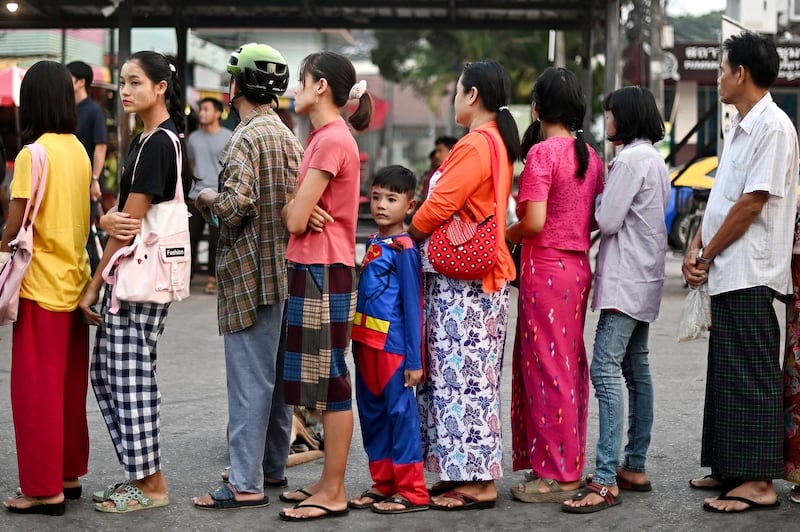
Migration has always been a key part of human history, driven by the quest for better living conditions and opportunities. For many Burmese people, moving to Thailand has become a significant option due to urgent issues such as health problems, lack of educational access, economic struggles, and cultural ties. This movement reflects not only the hardships faced in Myanmar but also the hope for a safer, better life in Thailand.
Health issues are particularly significant for Burmese migrants, as Myanmar’s healthcare system remains underdeveloped. Many families face heartbreaking decisions, unable to find necessary treatments for severe illnesses such as tuberculosis and HIV within their own country. For instance, the Mae Tao Clinic in Mae Sot serves as a beacon of hope for countless migrants, providing essential care to those in need. The clinic treats tens of thousands of patients from Myanmar every year, underscoring the dire state of healthcare in their homeland. This gap in medical care is a powerful driver of migration, but it is by no means the only factor contributing to the decision to move.
In addition to health concerns, education in Myanmar is another critical issue. The country’s educational system suffers from overcrowded classrooms, a shortage of qualified teachers, and underfunded schools, particularly in rural areas. These limitations restrict many children’s access to quality education, perpetuating a cycle of poverty and limiting future opportunities. For families eager to provide a better future for their children, Thailand offers a more developed education system. With better infrastructure, more qualified teachers, and a broader range of opportunities for learning and growth, Thailand has become an appealing destination. Though challenges such as language barriers and legal restrictions remain, many Burmese migrants view education as a vital factor in improving their children’s prospects.
Economic struggles also play a significant role in motivating migration. In Myanmar, low wages, high unemployment, and a lack of job opportunities contribute to widespread poverty. For many Burmese workers, seeking better wages and living conditions is a primary reason for moving to Thailand. In sectors such as agriculture, construction, and domestic work, migrant workers often earn higher wages compared to what they could in Myanmar. According to the United Nations High Commissioner for Refugees (UNHCR), migrant labor from Myanmar fills crucial labor shortages in Thailand’s low-wage sectors. Although these jobs often come with harsh working conditions, they provide migrants with the hope of a more stable financial situation and the ability to send remittances back home, helping to reduce poverty in their communities.
Beyond economic and educational factors, cultural ties between Myanmar and Thailand are another important influence on migration. Many ethnic groups, particularly those living near the border, share strong cultural, linguistic, and religious connections with their counterparts in Thailand. These shared ties make the transition to life in Thailand easier for many migrants, as they can rely on established social networks of relatives and friends who have already settled there. Such communities provide vital support, helping migrants find housing and employment, thus easing the settlement process. Moreover, the cultural familiarity migrants experience in Thailand allows them to maintain their traditions and beliefs while integrating into Thai society, fostering a sense of belonging amidst the challenges of displacement.
In conclusion, migration from Myanmar to Thailand is not just an escape from hardship but a courageous pursuit of a better life. Driven by the need for better healthcare, education, and economic opportunity, Burmese migrants face immense challenges but remain determined to secure brighter futures for themselves and their families. The issues they face highlight critical gaps that require urgent attention, from healthcare and education to labor rights and legal protections. Addressing these gaps, both in Myanmar and Thailand is essential not only for the well-being of migrants but for the creation of a more just and equitable society. The resilience of these migrants calls for more than sympathy; it demands action to create sustainable solutions that allow people to thrive without having to leave home.
Snow May
ASB Green Valley
Bibliography
“Save the Children | Myanmar.” Save the Children | Myanmar, https://www.savethechildren.net/myanmar. Accessed 20 Jan. 2025.
Chen, Wei-Ti, et al. “Myanmar Migrants Living along the Thailand-Myanmar Border: Experiences Related to Pandemic and Migration Decisions.” Journal of Migration and Health, vol. 10, 1 Jan. 2024, https://doi.org/10.1016/j.jmh.2024.100259. Accessed 20 Jan. 2025.
 The Burman Newspaper
Leave a comment