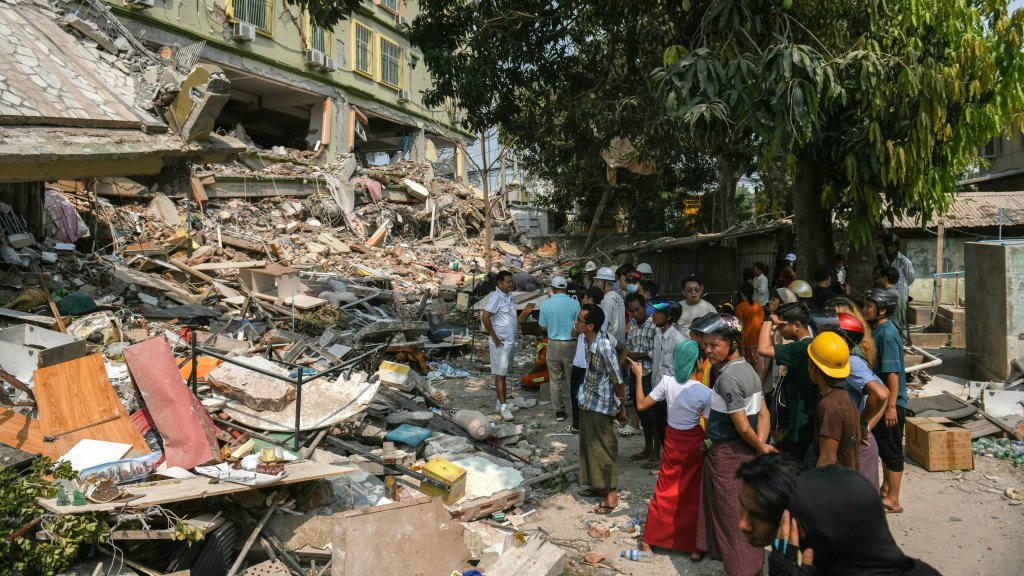
Around five months ago, on March 28, 2025, a devastating 7.7-magnitude earthquake struck the epicenter in Sagaing and Mandalay. As the strongest earthquake this year, it not only killed over 3,700 people and injured 4,800, but exacerbated the humanitarian crisis already fueled by the ongoing civil war. According to the United Nations, more than 4.3 million people needed necessities, as the earthquakes severely damaged major infrastructures in the city. Amid this natural disaster, a group of Burmese college students and affiliated BURSA groups, including the Burman, quickly sprang into action — they formed the “BURSA Alliance” and organized a GoFundMe that raised over $90K for earthquake relief.
Within just 24 hours of the quake, what began as a conversation among a few organizers quickly grew into a collective effort involving over 120 students from more than 35 prestigious universities, such as Harvard, Yale, MIT, Brown, and Cornell. Additionally, over 20 associate groups, student organizations, and Burmese hubs also joined the initiative, expanding BURSA Alliance’s reach. Rallying around a shared goal, the group launched a GoFundMe campaign and advertised the initiative on social media platforms. Fundraisers quickly went viral and raised over $70,000 in just two weeks.
With hundreds of shares and reposts, the GoFundMe quickly went viral on Instagram. The Burmese diaspora from around the world started donating, while many non-Burmese foreigners also contributed to the cause, showing solidarity with the victims of the earthquake.
By the time the GoFundMe crossed $10,000, organizers began to critically assess how to deliver the funds securely and effectively to on-the-ground victims. Since GoFundMe requires that all donations be withdrawn through a registered 501(c)(3), the BURSA Alliance decided to partner with a nonprofit. After research, Better Burma stood out for “their ability to send the funds directly to those on the ground at the epicenter of the earthquake.”
The nonprofit allocated the funds as part of its “Three-Phase Earthquake Relief Plan,” which aims to bring both immediate survival needs and long-term recovery for affected regions in Myanmar. For the first phase, “Emergency Relief,” the team focuses on supplying life-saving essentials like food, water, medicine, tents, toilets, and an emergency mobile clinic to victims. In the second “Recovery & Reconstruction,” Better Burma focuses on rebuilding homes and infrastructure, lasting 6 months depending on needs. Finally, the final phase, “Sustained Recovery & Community Resilience,” initiates long-term support like healthcare, trauma counseling, education, and livelihood programs.
With over $90,000 fundraised from the BURSA Alliance and independent donations, Better Burma worked alongside over 100 volunteers in the first phase to support more than 10,000 victims from the most affected regions in Mandalay, Sagaing, and Inle Lake. Many other NGOs, like Better Burma, have played a crucial role in earthquake relief efforts and raising awareness. Amidst the devastation it caused, the earthquake ignited a powerful moment of unity for Burmese students and diaspora around the world.
Amy Khaing
Boston, USA
 The Burman Newspaper
Leave a comment