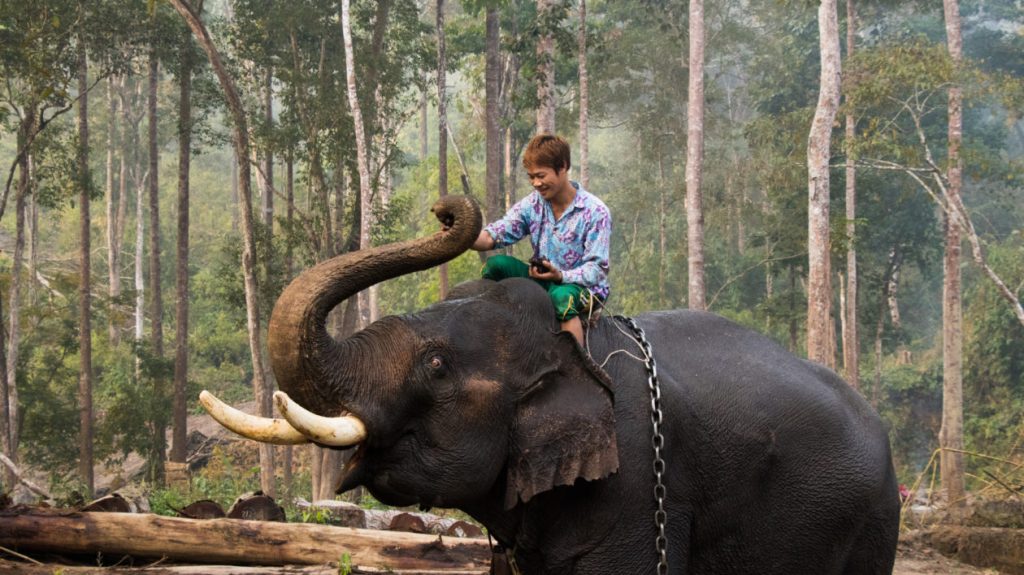
Beneath the canopy of Myanmar’s dense forests, elephants are disappearing at a shocking rate, being killed not just for ivory, but for their skin too. According to the Wildlife Conservation Society, Myanmar has lost 20% of its wild elephants in just a few years due to this gruesome trend (Frontier Myanmar). Although Myanmar was once a biodiversity haven, it now faces a catastrophic wildlife emergency driven by poaching, deforestation, climate change, and weak enforcement, so the urgency to act has never been greater.
With more than 300 endangered species, Myanmar is one of Southeast Asia’s most ecologically rich yet threatened countries (The Irrawaddy, IUCN Red List). Myanmar is home to well-known creatures such as the Sunda pangolin, Asian elephant, Burmese star tortoise, and Irrawaddy dolphin. “It’s not just elephants, but also tigers and a lot of wildlife are being killed. It’s not even that much money for these poachers killing the animals,” stated local conservationist and ONE Championship athlete Aung La N Sang (OneFC). Conservation efforts are no longer optional; they are essential.
Myanmar’s list of critically endangered animals includes some of the world’s most unique and vulnerable species, like the Irrawaddy dolphin, which is native to Myanmar’s rivers, which have seen a dramatic drop in populations due to entanglement in fishing nets and pollution (Mongabay). The Burmese star tortoise, once nearly extinct in the wild, remains critically endangered despite recent breeding successes (Wiley Online Library).
The Asian elephant, whose population in Myanmar is estimated at fewer than 2,000 in the wild right now, is facing poaching for the skin trade and human-wildlife conflict due to habitat loss (Earth Journalism). As is widely known, pangolins are one of the most trafficked mammals globally and are also hunted for their scales and meat, especially in Myanmar’s border regions where enforcement is weakest (WWF Greater Mekong). The saltwater crocodile, limited to coastal zones, is under threat from climate change and mangrove destruction (Mongabay).
Other imperiled species include the Eld’s deer, leopard cat, Malayan tapir, and even recently discovered species like the vampire hedgehog and eyelash viper, showing how much we have yet to learn about Myanmar’s ecosystems (The Times). As mentioned before, according to the 2024 national report for wildlife, over 300 animal species are threatened with extinction in the country (CMS.int).
One of the main threats to Myanmar’s biodiversity is the rapid forest clearing for logging, agriculture, and palm oil plantations. According to UCS, in Asia, Myanmar has one of the greatest rates of deforestation, with satellite data showing the loss of trees in the Tanintharyi and Sagaing regions (UCS Blog). As forests vanish, so do the habitats of endangered animals.
“In Asia, Myanmar has one of the greatest rates of deforestation, with satellite data showing the loss of trees in the Tanintharyi and Sagaing regions”
— UCS Blog
Another increasing threat is the illegal wildlife trade, where the trafficking of animals and animal parts has become a big issue in Myanmar, especially in border towns near China and Thailand, where goods such as pangolin scales, elephant skins, and tiger bones are regularly moved across those borders in the infamous “Golden Triangle” of wildlife trafficking, which includes Myanmar (Save the Elephants). In addition, controversial wildlife farms with weak control and operating under inadequate oversight have been linked to illicit trading networks, making conservation efforts significantly more challenging, according to the Bangkok Post.
These problems have been made worse by climate change, as rising temperatures are unpredictable and rainfall patterns are changing food sources and habitats. Droughts are endangering freshwater animals like the Irrawaddy dolphin, while coastal regions that are home to saltwater crocodiles are eroding. (Mongabay). According to a Mizzima report from 2025, animals and humans are clashing over diminishing natural resources as a result of harsh weather events.
” Animals and humans are clashing over diminishing natural resources as a result of harsh weather events.”
—-Mizzima report
Despite all of these dire threats, there is hope. Numerous organizations are putting up endless effort to save Myanmar’s fauna. Myanmar’s Forest Department and the Wildlife Conservation Society have teamed up to establish wildlife corridors and protected areas, particularly in elephant ranges (Frontier Myanmar). Projects run by the community are also succeeding. Friends of Wildlife Myanmar (FOW), for instance, carries out local outreach programs to educate villages on the importance of biodiversity and sustainable practices. (Myanmar FOW).
The government of Myanmar has also taken action; in an effort to protect native species and woodlands, they introduced the National Biodiversity Strategy and Action Plan (NBSAP), who are committed to preserving native species and forests (MOI.gov.mm). Increased law enforcement efforts to prevent human trafficking have resulted in recent arrests that have halted illegal trade routes across border communities (Save the Elephants); additionally, WWF Myanmar reports that increased funding and international partnerships are starting to support more robust conservation initiatives (WWF Interview). But there are still problems like a tight budget and a lack of trained rangers. Many protected zones are only existential (GNLM.com.mm), with little protection on the ground. Additionally, because of the economic difficulties caused by the COVID-19 pandemic, poaching surged, and many field activities were halted (AP News).
Wildlife in Myanmar is at a turning point. There is still time to take action, even though species like the stately elephant and the secretive star tortoise are disappearing before our very eyes. Myanmar can turn things around by bolstering laws and safeguards, integrating local expertise with international assistance, and more. As said by Aung La N Sang, “We’re put in a place where we have this platform, and it’s important that we use it to make our future better – to make the world a better place.” (OneFC). Before it’s too late, the world needs to help Myanmar protect its priceless natural legacy; otherwise, we may never see the fauna and biodiversity in Myanmar flourish again.
Julian @ Moe Myint
United Arab Emirate
Citations
“300 Species in Myanmar Endangered: Report.” The Irrawaddy, 2023, http://www.irrawaddy.com/news/burma/300-species-myanmar-endangered-report.html.
“Aung La N Sang on a Mission to Save Myanmar’s Endangered Wildlife.” ONE Championship, 2023, http://www.onefc.com/features/aung-la-n-sang-on-a-mission-to-save-myanmars-endangered-wildlife.
“Farming of Rare Animals in Myanmar Decried.” Bangkok Post, 2020, http://www.bangkokpost.com/world/1949684/farming-of-rare-animals-in-myanmar-decried.
“Focus on Law Enforcement in Myanmar as It Moves to Crack Down on Wildlife Trade.” Save the Elephants, 2023, savetheelephants.org/news/focus-on-law-enforcement-in-myanmar-as-it-moves-to-crack-down-on-wildlife-trade.
“Going Viral: The Impact of Wildlife Trade in the Greater Mekong.” WWF Asia Pacific, 2024, asiapacific.panda.org/?372899%2Fgoing-viral-report=.
“Golden Triangle Is Ground Zero for Wildlife Trafficking: WWF.” Save the Elephants, 2023, savetheelephants.org/news/golden-triangle-is-ground-zero-for-wildlife-trafficking-wwf-thailand-laos-and-myanmar.
“IUCN Red List of Threatened Species: Myanmar.” International Union for Conservation of Nature, 2024, http://www.iucnredlist.org/search?query=myanmar&searchType=species.
“Myanmar: Environmental Initiatives.” Ministry of Information, 2024, http://www.moi.gov.mm/moi:eng/article/14793.
“Myanmar: Protecting Nature, Empowering People.” Friends of Wildlife Myanmar, 2023, http://www.fowmyanmar.org.
“Myanmar’s Conservation Landscape Post-COVID.” Associated Press, 2023, apnews.com/article/covid-science-business-health-asia-28d8e4778f0b1ab14d38405df550316a.
“Myanmar’s Elephants on Red Alert.” Earth Journalism Network, 2023, earthjournalism.net/stories/myanmars-elephants-on-red-alert.
“Myanmar National Report 2024.” Convention on the Conservation of Migratory Species of Wild Animals (CMS), 2024, beta.cms.int/document/myanmar-national-report-2024.
“Protect Critically Endangered Wildlife and Plant Species.” GNLM, 2024, http://www.gnlm.com.mm/protect-critically-endangered-wildlife-and-plant-species.
“Protecting Myanmar’s Elephants from Extinction.” Frontier Myanmar, 2023, http://www.frontiermyanmar.net/en/protecting-myanmars-elephants-from-extinction.
“Risks to Myanmar’s Last Saltwater Crocs Point to Coastal Conservation Needs.” Mongabay, 2024, news.mongabay.com/2024/02/risks-to-myanmars-last-saltwater-crocs-point-to-coastal-conservation-needs.
“Understanding Local Impacts to Inform Wildlife Conservation.” Union of Concerned Scientists, 2023, blog.ucs.org/science-blogger/understanding-local-impacts-to-inform-wildlife-conservation.
“Vampire Hedgehog and Eyelash Viper Among New Species in Asia.” The Times, 2024, http://www.thetimes.com/uk/environment/article/vampire-hedgehog-and-eyelash-viper-among-new-species-in-asia-lwjtbf0vn.
Wright, Brett, et al. “Community-Based Conservation in Myanmar.” Integrative Conservation, vol. 2, no. 1, 2022, onlinelibrary.wiley.com/doi/full/10.1002/inc3.78.
WWF Myanmar. “Interview with WWF Myanmar.” Myanmar Insider, 2023, http://www.myanmarinsider.com/interview-with-wwf-myanmar-2.
“Burma’s Biodiversity Is Rapidly Disappearing.” Global Conservation, 2023, globalconservation.org/news/burma-biodiversity-disappearing.
 The Burman Newspaper
Leave a comment