Introduction
Myanmar is a nation where spirituality, culture and traditions abound. Every year, Myanmar showcases its location in the world from their Buddhist heritage and traditions to its adorned cultural practices. There are numerous festivals that take place throughout the year that celebrate its traditions and changing of seasons. The three largest celebrations are: Thingyan, Thadingyut and Tazaungdaing. Each of these celebrations reflect the unique timelines of the Buddhist calendar embracing the spiritual connection between Buddha and his followers.
Thingyan: Water Festival (Mid-April)
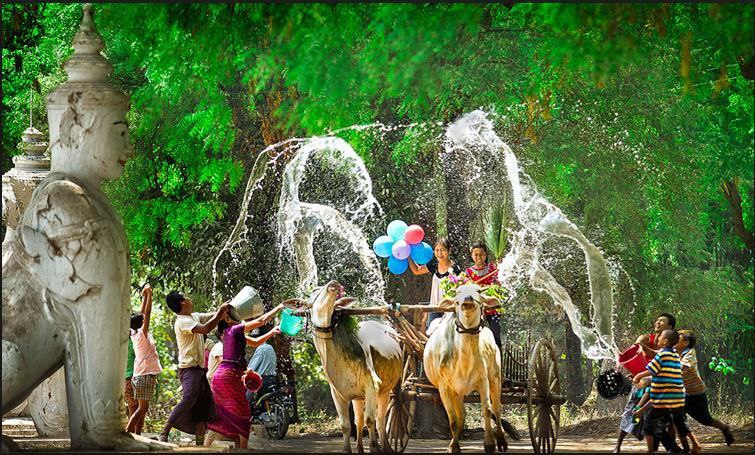
Thingyan, which is Myanmar’s New Year festival, is considered a festive period of joy and happiness in Myanmar. The celebration is well-known for its water-throwing customs, where well-wishers splash water on each other as a symbolic respect for washing away the misfortunes and sins from the previous year (Mekong Tourism, 2025). This is an ancient custom in Buddhist philosophy about “purification” or “fresh beginnings” in a new year. The streets are packed with music, dance, and temporary water-splashing tents called pandals. These playful water fights attract people of all ages as cities and towns become a gigantic water park for celebration.
Beyond the joyous festivities, Thingyan is a sacred and spiritual adventure. During this time many Buddhists engage in many merit-making customs such as: donating food, offerings to monks, cleaning pagodas, and releasing captive animals to celebrate compassion (Travel Authentic Asia, 2025). Common merit-making activities include performing satuditha1 where there are feasts, during the festival, for which free food and water is shared with the community, to reinforce generosity and kindness. This act helps purify the people’s karma across the festival, getting them spiritually ready for the new year.
Thadingyaut: The Festival of Lights (September-October)
Thadingyut marks the end of the “Three Month Retreat for Buddhism”, which pays tribute to Buddha’s descent from Tavatimsa2 Heaven after he taught the Abhidhamma3 to his mother
(Myanmar National Portal, 2025). It is observed on the full moon day of the 7th month of the traditional Burmese calendar. In remembrance of the return of Enlightenment, homes, pagodas, and streets are decorated with thousands of candles and colorful lanterns glowing warmly across the whole of Burma. The Festival of Lights shows the overcoming of wisdom over darkness and faces people to reflect spiritually.
A unique aspect of Thadingyut is the gadaw4 ceremony whereby all younger generations pay their respect to elderly family members, teachers, or mentors by praying, bringing gifts, and asking to be forgiven which reinforces the family and social ties (SJSU Blogs, 2023). In conjunction with these respectful practices, the celebrations are filled with culturally-based practices, such as traditional performances called zat pwe5, and shared family meals with the community to build cohesiveness and express gratitude. Thadingyut nights create opportunities for lively, yet respectful, celebrations that balance joy with reflection and reverence.
Tazaungdaing: The Festival of Robes and Light (October-November)
Tazaungdaing occurs on the day of the full moon in the 8th month of the Burmese lunar calendar and marks the end of the rainy season. It is associated with the Kathina ceremony when monks receive new robes marking it as an important part of the act of merit-making (Aye Yar River View Resort, 2014). One of the festival highlights is the matho-thingan6 robe wearing event, in which devotees compete overnight to produce the most remarkable yellow monk robes, reflecting their religious commitment and craftsmanship.
The festival is known for a prominent hot-air balloon festival that takes place in Taunggyi, Shan State, where huge shaped paper balloons are set alight with fireworks and launched at nightfall. The glow of fireworks launches into the sky creating a majestical display that attracts devotees and visitors from around Myanmar and beyond (Feti’a Assistance, 2021). People around the festival create luminous lanterns winding through towns and villages, while free satuditha feasts are provided to neighbors and visitors. The charitable giving and social harmony central to the festival.
Conclusion
The three festivals, Thingyan, Thadingyut, and Tazaungdaing express an ongoing cycle of spiritual renewal through deference and generosity consistent with Myanmar’s cultural identity. These festivals allow people to renew relationships with their faith, pay respect to their elders; and show kindness to everyone around them, which are central Buddhist values in everyday life (Mekong Tourism, 2025). Moreover, the joy and solemnness felt through and between these celebrations demonstrates a sense of connectedness and continuity throughout the many communities in Myanmar.
By taking part in these traditional celebrations, the festival as a whole, provides a clear representation of Myanmar’s culture where spirituality and culture cannot be separated and where each joyous act of celebration draws people closer to each other and their relevant past (Aye Yar River View Resort, 2014).
“These festivals allow people to renew relationships with their faith, pay respect to their elders; and show kindness to everyone around them, which are central Buddhist values in everyday life.”
—- Mekong Tourism, 2025
1 Satudita: Burmese practice of offering food to the community
2 Tavatimsa: the thirty third heaven
3 Abhidhamma: higher teaching
4 Gadaw: pray
5 Zat Pwe: theatrical performances
6 Matho-Thingan: Non-sewn robe
Christine
MISY, Myanmar
Bibliography
1. Mekong Tourism (2025) ‘Thingyan Burmese Water Festival, Myanmar’. Available at: https://mekongtourism.org/events/thingyan-burmese-water-festival-myanmar 2/ (Accessed: 21 July 2025).
2. Travel Authentic Asia (2025) ‘Thingyan Water Festival: Essential Tips’. Available at: https://www.travelauthenticasia.com/guides/myanmar/myanmar-water-festival thingyan-festival-tips-for-you.aspx(Accessed: 21 July 2025).
3. Myanmar National Portal (2025) ‘Festivals – Thadingyut & Tazaungdaing’. Available at: https://myanmar.gov.mm/festivals (Accessed: 21 July 2025).
4. SJSU Blogs (2023) ‘The Magical Thadingyut Festival of Myanmar’, 13 October. Available at: https://blogs.sjsu.edu/isss/2023/10/13/the-magical-thadingyut-festival-of myanmar/ (Accessed: 21 July 2025).
5. Aye Yar River View Resort (2014) ‘Tazaungdaing Festival’. Available at: https://www.ayeyarriverviewresort.com/tazaungdaing-festival/ (Accessed: 21 July 2025). 6. Feti’a Assistance (2021) ‘Tazaungdaing Festival in Myanmar’. Available at: https://fetia assistance.com/2021/11/03/tazaungdaing-festival-in-myanmar/ (Accessed: 21 July 2025).
 The Burman Newspaper
Leave a comment