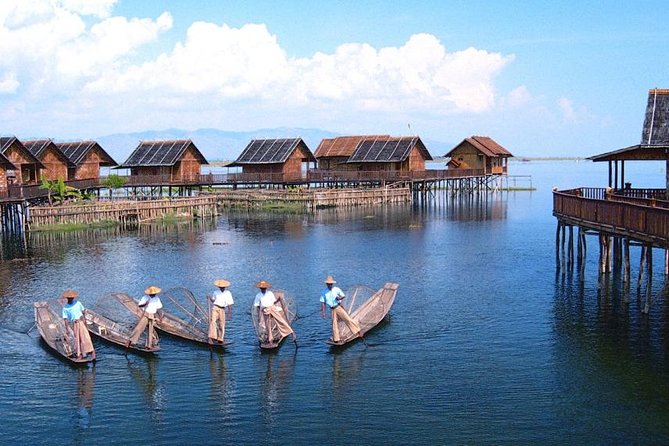
At dawn, the waters of Inle Lake once shimmered like polished silver, mirroring the sky as fishermen balanced gracefully on their narrow canoes, silhouetted by the sun’s golden rays. Floating gardens drifted between villages raised on stilts, and the rhythmic splash of oars was a lullaby to a region steeped in harmony with nature. However today, this symphony begins to crack ever faster than before. Algal blooms suffocate the once-clear waters. Boats cut through layers of plastic waste. Atlas, the lake that had sustained generations of Intha people is slowly drowning, not in water, but in neglect. Thus the question looms: can Myanmar save this cultural and ecological treasure before it’s too late?
The Root Problem
One of the most pressing causes of Inle Lake’s degradation lies in its agriculture. While the lake’s floating gardens are admired worldwide for their ingenuity, years of unregulated chemical use have transformed this sustainable tradition into an environmental hazard. Farmers cultivating tomatoes and other crops on these floating plots increasingly rely on synthetic fertilizers and pesticides. As runoff from these substances enters the lake, it brings about eutrophication, which fuels massive algae growth. This blocks sunlight, reduces oxygen levels, and essentially suffocates aquatic life. Reports by UNDP and Myanmar’s Forest Department highlight that nitrate and phosphate levels have surged in recent years, correlating with the collapse of native fish species like the Inle carp. At the same time, invasive species thrive, upsetting the natural balance. For the local Intha people, whose livelihoods depend on fishing, the decline is not just ecological but economic. This demonstrates that traditional practices, if left unchecked in modern contexts, can have destructive outcomes. Though while farmers cannot be expected to abandon their crops overnight, the government must intervene to encourage organic alternatives, provide subsidies for eco-friendly fertilizers, and establish agricultural buffer zones. Otherwise, what was once an emblem of harmony with nature will become a cautionary tale.
“Nitrate and phosphate levels have surged in recent years, correlating with the collapse of native fish species like the Inle carp.”
—-UNDP and Myanmar’s Forest Department
Other factors
Beyond agriculture, the lake is buckling under the weight of unsustainable tourism. What was once a quiet region has become a hotspot for visitors seeking beauty and authenticity, ironically endangering the very qualities that drew them. Tourist numbers to Inle Lake increased dramatically in the past decade, and the demand for hotels, restaurants, and guided tours has grown with them. However, many accommodations are built along the lake’s perimeter without proper sewage systems, and untreated wastewater flows directly into the water. Diesel-powered motorboats, favoured for their speed, discharge oil and create noise pollution that disrupts both wildlife and village life. What’s tragic is that tourism, a potential source of pride and income, is now accelerating the lake’s decline. But this path is not irreversible. Countries like Bhutan and Costa Rica have successfully modeled eco-tourism that benefits both people and the environment. Myanmar too can impose caps on tourist numbers, encourage the use of electric boats, and reward hotels that adopt green infrastructure. With the right policies, tourism could become a tool for preservation rather than destruction.
Potential and Limitations
Despite these challenges, hope remains in the hands of those who call the lake home. Grassroots movements and community-led conservation efforts have begun to emerge with surprising strength. In Nyaungshwe, schoolchildren and monks regularly participate in lake-cleaning days, while local NGOs like the Inle Lake Conservation Network promote reforestation and sustainable water use. Some villages are even returning to traditional ecological knowledge, such as planting kaing grass along the banks to prevent erosion and purify runoff. These actions, though small in scale, reveal a deep sense of ownership and stewardship among locals. They are not waiting for government intervention—they are acting now. However, passion and initiative alone are not enough. Without consistent funding, technical training, and institutional support, these efforts will struggle to create long-term change. What Myanmar’s government must realize is that empowering these communities is not just stable politics—it’s smart environmental strategy. The people who live by the lake are its best guardians.
Inle Lake is more than a body of water. It is memory, identity, economy, and ecosystem woven into one. Saving it is not just about cleaning up waste or regulating tourism for the country’s economic benefit. It is about recognizing that environmental protection cannot be delayed until it is convenient. One must view sustainability as an integral part of life rather than a burden and hence embrace it as an opportunity for renewal. The shimmering waters may still recover. But time, like the lake, is running out.
Connie
SJI, Singapore
Citation
- UNDP Myanmar and Forest Department (2019). Inle Lake Conservation and Rehabilitation Projects. Available at: https://www.undp.org/myanmar/publications/inle-lake-conservation-and-rehabilitation-stories-myanmar
- Myanmar Times (2018). Inle Lake faces pressure from tourism boom. Available at: https://www.mmtimes.com/news/social-canoes-sail-inle-lake.html
Flora and Fauna International (2023). Inle Lake Conservation Network. Available at: https://www.fauna-flora.org/countries/myanmar/
 The Burman Newspaper
Leave a comment