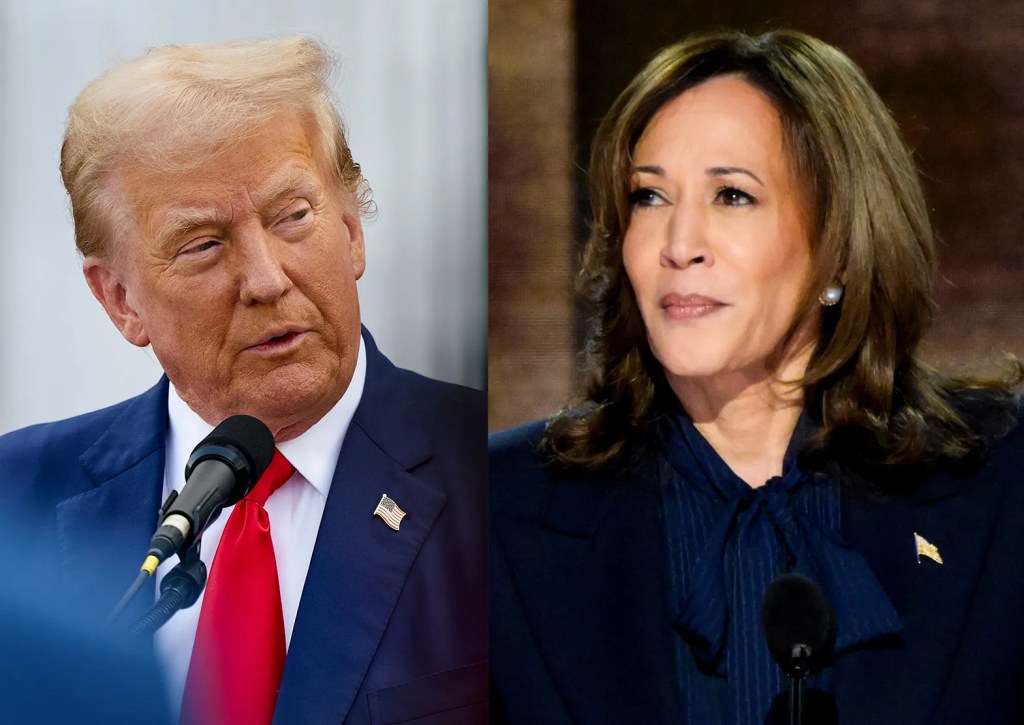
During the initial presidential debate, Kamala Harris and Donald Trump had a major confrontation, with Harris skillfully forcing Trump to defend himself for the entire 1 hour and 45 minutes. Harris, who is the vice president, came into the debate with a well-defined plan to unsettle Trump, and she carried it out with accuracy. She critiqued him on various subjects, basing her arguments on his apparent shortcomings and past controversial deeds. This method enabled her to control the discussion and uphold a steady storyline throughout the night.
Harris’s criticism of Trump was especially sharp when it came to his treatment of women’s rights and abortion. She emphasized the actual effects of strict state laws on women dealing with pregnancy issues. By focusing on personal anecdotes and persuasive reasoning, she stressed the challenges that numerous women face in accessing essential healthcare within existing laws. Trump’s stance on abortion was frequently unclear and ambiguous, hindering his ability to effectively explain and defend his policies. His attempt to soften his position, while also backing the Supreme Court’s ruling on Roe v. Wade, was unsuccessful in light of Harris’s strong arguments.
During the discussion, Harris used sharp personal criticisms to unsettle Trump. She referred to him as “weak” and mentioned that global leaders were mocking him. This method seemed to strike a chord, causing Trump to often show signs of annoyance, veering off topic to address his complaints and previous statements. During the debate, Harris appeared to have difficulty understanding the significance of the votes that caused Trump’s defeat in the 2020 election, showing his challenges in the discussion. Trump frequently displayed a lack of self-control in his reactions. He vocally asserted numerous lies, such as continuously stating there was extensive fraud in the 2020 election and bizarre conspiracy theories about immigrants. One notable event was when he falsely claimed that migrants were consuming pets, a claim that Harris responded to with obvious doubt. Instead of addressing the claims seriously, Trump prioritized the entertainment factor of his rallies, ultimately shifting focus away from important issues. As the discussion continued, it was evident that Trump was having difficulty effectively addressing Harris’s criticisms. When trying to shift the discussion toward economic issues, the moderators found Trump’s responses to be incoherent, as he did not rebut Harris’s points about his tariff plans and previous actions. Instead, he returned to well-known talking points, reiterating assertions about the economy that were lacking in substance or factual backing.
A recent CNN survey showed that the majority of viewers thought Harris did better in the debate. Her strategic use of direct questions and challenges likely influenced this perception, effectively pushing Trump into lengthy defenses. Her skill in throwing Trump off-guard not only demonstrated her readiness but also underscored her competence as a debater.
Harris’s campaign promptly took advantage of her strong performance by requesting a second debate to continue involving voters and building on the momentum from her impressive display. This confidence was part of a larger plan to depict Harris as a strong contender against Trump, portraying her as a supporter of the middle class and painting Trump as self-centered and disconnected. The debate was characterized by instances that highlighted the sharp differences between the two candidates. Harris’s initial comments established a sense of direct involvement, highlighting her dedication to the needs of the American people. She expressed her ideas for an economy that emphasized working families, as opposed to Trump’s consistent emphasis on tax breaks for the rich and large companies. The discussion was characterized by instances that highlighted the clear differences between the two candidates. Harris began by creating an atmosphere of open involvement, highlighting her dedication to the needs of the American people. She expressed her idea for an economy that put working families first, instead of Trump’s past emphasis on tax breaks for the rich and large companies. Harris vividly portrayed Trump as a candidate who prioritized self-defense over addressing the needs of average Americans.
The interaction between Harris and Trump stood out in the debate’s atmosphere. When they came onto the stage, Harris extended a hand for a handshake, setting a tone of politeness in the midst of a heated debate. Nevertheless, as the conversation continued, it became clear that the friendly atmosphere was soon replaced by significant differences and confrontational interactions. During the night, Trump tried to change the story by mentioning different conspiracy theories, resulting in scattered discussions that took attention away from the main topics. The moderators fact-checked his remarks on crime and the 2020 election, revealing a discrepancy between his claims and verified facts. This dynamic showed Trump’s use of typical language and struggle to address the topics raised by Harris.
As the discussion came to an end, it was evident that Harris’s strategy had successfully positioned her as a viable candidate and a passionate supporter of the electorate. Through direct challenges to Trump and compelling arguments on crucial topics such as abortion and economic policy, Harris connected with the audience and showcased her preparedness for the future political environment. In general, the debate helped strengthen her position in the campaign and underscored the major policy and approach distinctions between the two contenders.
Grace
AIS, Myanmar
Citations:
- BBC Article: Zurcher, Anthony. “Title of the Article.” BBC News, 11 Sept. 2024, https://www.bbc.com/news/articles/c4gdnl9pg1wo
- The Guardian Video: “Harris v Trump: Highlights of the Presidential Debate.” The Guardian, 11 Sept. 2024, https://www.theguardian.com/us-news/video/2024/sep/11/harris-v-trump-highlights-of-the-presidential-debate-video
- CNN Debate Takeaways: Bradner, Eric, Arit John, Daniel Strauss, Betsy Klein, and Gregory Krieg. “Debate Takeaways: Trump-Harris.” CNN, 10 Sept. 2024, https://edition.cnn.com/2024/09/10/politics/debate-takeaways-trump-harris/index.html
 The Burman Newspaper
Leave a comment